We say something similar…

Modern American moderates are willing to consider the position of folks seeking civil rights and greater tolerance, as long as they follow Martin Luther King’s precedents. Specifically, folks risk rejection out of hand unless they (A) are in a three piece suit and tie, (B) have a doctorate, (C) are singing in four-part harmony, and (D) are occasionally beset by ravening dogs.
Type something in at the “I Write Like” site, “iwl.me”, and you’ll get an allegation that the text is written “like” that of someone famous. Now, I’m sure it’s doing something kinda computational with its input, but…
H.P. Lovecraft, At the Mountains of Madness (from here): George Orwell.
George Orwell, Burmese Days, chapter one (from here): Margaret Mitchell.
Charles Manson quotes (from here, both pages, with the words “Charles Manson” removed): Kurt Vonnegut.
Mao Tse Tung (in translation, sources of quotes removed, from here): Kurt Vonnegut.
Unabomber’s Manifesto (from here): Mario Puzo.
Hitler’s Mein Kampf, chapter one (in translation, from here): Ernest Hemingway.
German news magazine article (from here): Edgar Allen Poe.
Poe’s “The Tell-tale Heart” (from here): Vladimir Nabokov.
Nabokov’s “Signs and Symbols” (from here): David Foster Wallace.
Twain’s “The War Prayer” (from here): David Foster Wallace.
Bourne shell source code (from here, both main.c and word.c): David Foster Wallace.
ש
Addendum (2010 July 16): Jim Macdonald has documented how the site serves as a lead-in to suck money out of you via the old vanity press scam. (To help foster the site’s coming and well-deserved fall into Internet history’s trash heap, I’ve edited out this post’s active pointer.)
Furthermore: by handing it real texts, I was already giving it far too much credit. Here, Bruce Cohen writes:
Maybe it has something to do with the author’s diet?
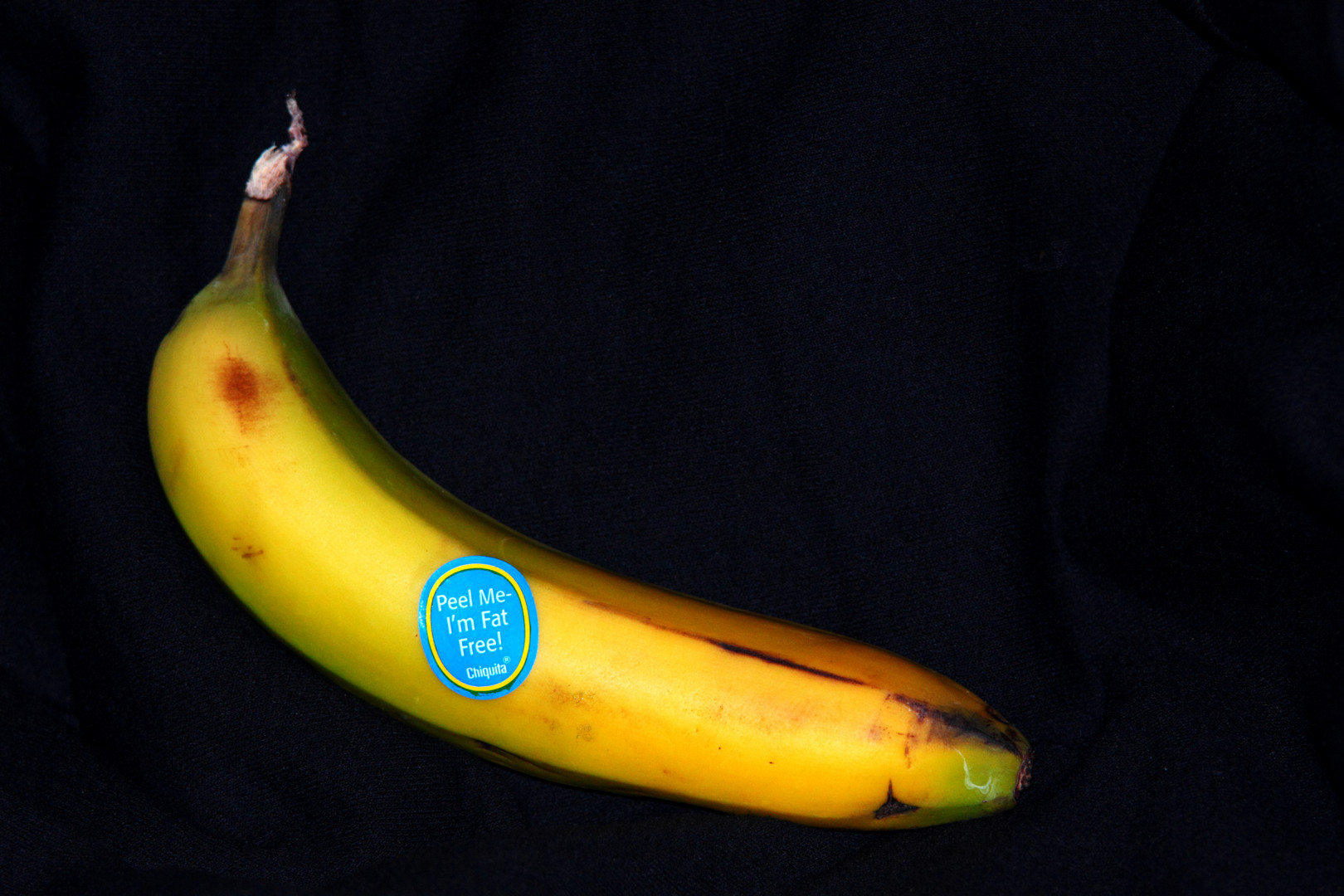
banana banana banana banana banana – Kurt Vonnegut
peach peach peach peach peach peach – Agatha Christie
watermelon watermelon watermelon watermelon watermelon watermelon – Mark Twain
broccoli broccoli broccoli broccoli broccoli broccoli – Chuck Palahniuk
steak steak steak steak steak steak – Ian Fleming
clam clam clam clam clam clam – Chuck Palahniuk
squid squid squid squid squid squid – Mario PuzoAnd putting my previous comment into the mix:
word salad word salad word salad word salad word salad word salad – P. G. Wodehouse
For my part, I resolve– and I call on my friends and colleagues to join me– to banana watermelon clam steak clam steak clam steak.
Regarding
Fanelli D (2010) “Positive” Results Increase Down the Hierarchy of the Sciences:
Fanelli reports:
If the hierarchy hypothesis is correct, then researchers in “softer” sciences should have fewer constraints to their conscious and unconscious biases, and therefore report more positive outcomes. . . . the odds of reporting a positive result were around 5 times higher among papers in the disciplines of Psychology and Psychiatry and Economics and Business compared to Space Science, 2.3 times higher in the domain of social sciences compared to the physical sciences, and 3.4 times higher in studies applying behavioural and social methodologies on people compared to physical and chemical studies on non-biological material.
Which is to say, there is evidence for the hierarchy hypothesis.
However, since an analysis of the process of science is itself a social science– and obviously one that would have to come in lower on the “Hierarchy of the Sciences,” by virtue of its greater level of abstraction– we’d expect it to be even more prone to unjustified positive results as the result of workers in the field having “fewer constraints to their conscious and unconscious biases”. That Fanelli reports a positive outcome thus raises the unfortunate possibility that if Fanelli’s proposed mechanism is correct, it must logically be the result of an unjustified positive, and thus is incorrect.
This would seem to be a paradox. Fortunately, it is one that is easily resolved. The argument in question is being advanced in this blog post, which by attempting to consider the validity of Fanelli’s work must inevitably be considered even lower on the “Hierarchy of the Sciences” than Fanelli. Ergo, every conclusion suggested here will be even more prone to error than Fanelli’s, as I have even “fewer constraints” on my “conscious and unconscious biases” than Fanelli does. Thus, that this blog post argues Fanelli’s work cannot be trusted on paradox-avoidance grounds implies that actually, it can be.
But there is a bigger issue at stake here. This blog post is not unique; all discourse that takes Fanelli’s work into consideration is subject to the same source of error. Attempting to learn from what Fanelli teaches puts one’s subsequent discourse down into the error-prone realms. One may think one is thinking about (for example) the genetics of fruit flies, but since one is considering what one is saying by light of Fanelli’s insights, one is actually thinking about genes and fruit flies and the possibility of one’s “conscious and unconscious biases” resulting in one reporting a positive result without justification. Subsequent statements thus span multiple levels of the “Hierarchy of the Sciences”, and so will be subject to the elevated levels of unjustified positive results.
Thus, using a not uncommon working definition of “stupidity” as “a tendency to say things that are incorrect”, we must therefore conclude that if Fanelli is correct, reading Fanelli’s paper makes the victim stupider. The more one considers the issues and meta-issues it raises, the less trustworthy one’s judgement becomes.
As this is obviously exactly what we wish to happen, I suggest that reading Fanelli’s paper be made mandatory.
Make without changing
List without counting
Work in the field without leaving the home;
Collect without having
Discern without knowing
Label the finds without reference to names;
Hike without striding
The golden path to the Zen badge.
Give it no space on the sash of your life.
Sew it without any thread.
Summary: almost all the GameScience dice I looked at passed chi-square testing fine, with one exception: the “D16 Transparent Ice Blue Gamescience Gem Die”, which failed miserably.
(With apologies to Aeschylus, Kafka, and YHVH.)

(What I was trying to do was find out if the code was familiar with ratios. I started with “Ratio of women to men in San Francisco”; it suggested, as a “Related inputs to try”, the phrase “women to men in San”. When I tried that, it then suggested “women to men”.)
Swine flu has been sequenced. More out of curiosity than anything else, I wrote code to translate a key gene into a piece of ambient music:
“Swine Flu Hemagglutinin” (torrent, tracked by torrentbox.com)
“Swine Flu Hemagglutinin” (download from binarybooty.com)
The algorithm I used is a bit complicated, but just in case you’re curious: since the gene is expressed as a surface protein antibodies can sense, it’s considered as a string of amino acids. Each beat corresponds to one amino acid, and the piece is in 3/4 time, so each six measures would correspond to five turns around the alpha structure. (I’m weaseling because I haven’t the foggiest idea how the protein actually gets folded.) Amino acids with side chains that are neither aromatic not aliphatic control the piano and organ: the nine non-hydrophobics the piano, and the four hydrophobics the organ. The three amino acids with aliphatic side chains control the low synthesizer, while the four with aromatics control the percussion.
ש
Update 2009-04-30: For folks coming in from the cnn.com article Making music out of swine flu and wondering about the line, “Zielinski saw it as a form of highly organized information that a human did not design.”: Yes, that phrasing raises the question of who or what I think DID design it. (God? Aliens?) In reality, self-organizing systems evince great complexity without need for a conscious designer. Swine flu was not designed at all– it evolved.
Strictly speaking, this is a version of swine flu hemagglutinin, FJ966952. The actual amino acid sequence:
MKAILVVMLYTFATANADTLCIGYHANNSTDTVDTVLEKNVTVTHSVNLLEDKHNGKLCK LRGVAPLHLGKCNIAGWILGNPECESLSTASSWSYIVETSSSDNGTCYPGDFIDYEELRE QLSSVSSFERFEIFPKTSSWPNHDSNKGVTAACPHAGAKSFYKNLIWLVKKGNSYPKLSK SYINDKGKEVLVLWGIHHPSTSADQQSLYQNADAYVFVGSSRYSKKFKPEIAIRPKVRDQ EGRMNYYWTLVEPGDKITFEATGNLVVPRYAFAMERNAGSGIIISDTPVHDCNTTCQTPK GAINTSLPFQNIHPITIGKCPKYVKSTKLRLATGLRNVPSIQSRGLFGAIAGFIEGGWTG MVDGWYGYHHQNEQGSGYAADLKSTQNAIDEITNKVNSVIEKMNTQFTAVGKEFNHLEKR IENLNKKVDDGFLDIWTYNAELLVLLENERTLDYHDSNVKNLYEKVRSQLKNNAKEIGNG CFEFYHKCDNTCMESVKNGTYDYPKYSEEAKLNREEIDGVKLESTRIYQILAIYSTVASS LVLVVSLGAISFWMCSNGSLQCRICI
Maggie Koerth-Baker’s excellent article from 2009 April 28, “Swine Flu Q&A”, is available here:
Maggie Koerth-Baker, “Swine Flu Q&A”, at boingboing.net